Introduction
Legacy system modernization has traditionally been one of the most challenging and risky endeavors in enterprise IT. Organizations with decades-old codebases face the daunting task of updating their systems while maintaining business continuity. Enter artificial intelligence – a game-changing technology that's revolutionizing how we approach code migration.
The Challenge of Legacy Systems
Many enterprises still run critical business operations on systems built decades ago. These legacy systems often:
- Use outdated programming languages and frameworks
- Lack proper documentation
- Have accumulated technical debt over years of patches
- Present significant security vulnerabilities
- Are difficult to integrate with modern cloud infrastructure
Traditional migration approaches involve manual code review, extensive testing, and significant downtime – all of which translate to high costs and business risk.
How AI Changes the Game
Intelligent Code Analysis
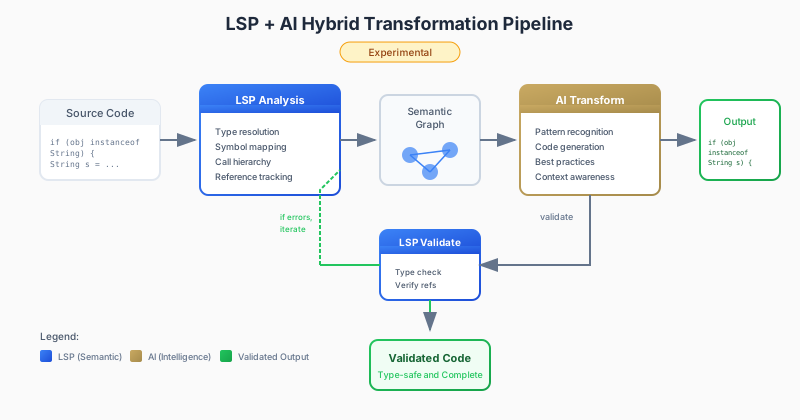
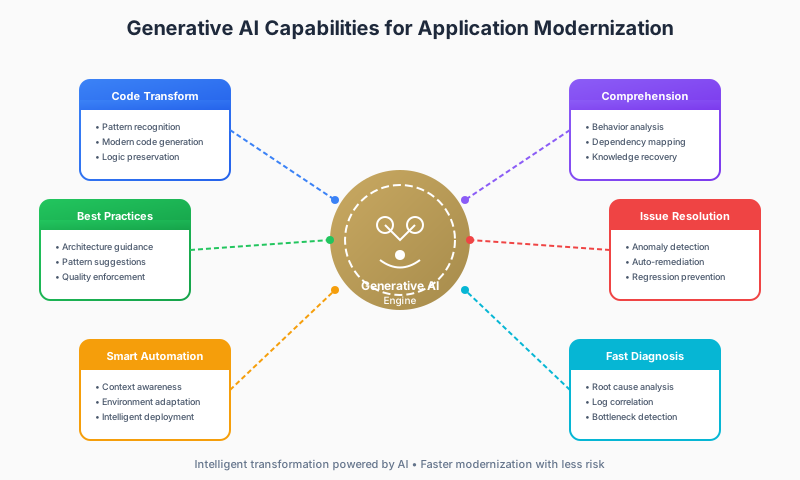
AI-powered tools can analyze millions of lines of code in hours, not months. Our platform uses advanced machine learning models to:
- Understand code semantics – Not just syntax, but the actual intent and business logic behind the code
- Map dependencies – Automatically trace how different components interact
- Identify patterns – Recognize common code patterns and anti-patterns
- Assess risk – Prioritize areas that need attention based on complexity and criticality
Automated Transformation
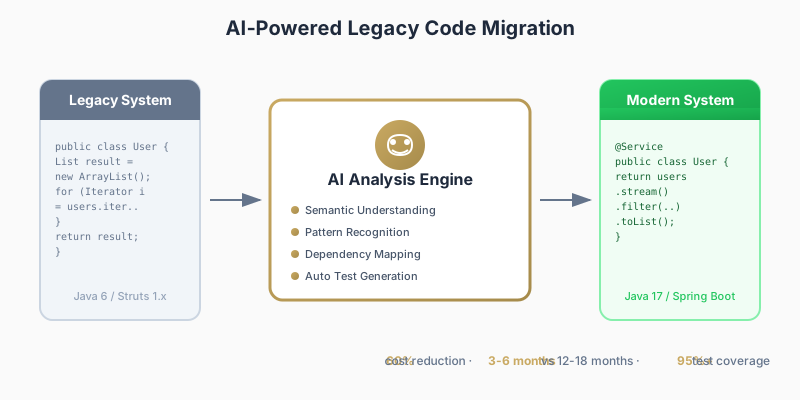
Once analysis is complete, AI can automate much of the actual transformation work:
// Before: Legacy Java 6 code
public class UserService {
    public List getActiveUsers() {
        List result = new ArrayList();
        for (Iterator i = users.iterator(); i.hasNext();) {
            User u = (User) i.next();
            if (u.isActive()) {
                result.add(u);
            }
        }
        return result;
    }
}

// After: Modern Java 17 code
public class UserService {
    public List<User> getActiveUsers() {
        return users.stream()
            .filter(User::isActive)
            .toList();
    }
}
Continuous Validation
AI doesn't just transform code – it continuously validates that the transformed code behaves identically to the original:
- Generates comprehensive test cases automatically
- Compares output behaviors between old and new implementations
- Identifies edge cases that might cause issues
- Provides detailed reports on any discrepancies
Real-World Results
Our clients have seen remarkable improvements:
| Metric | Traditional Approach | AI-Powered Approach |
|---|---|---|
| Time to migrate | 12-18 months | 3-6 months |
| Cost reduction | Baseline | 60% reduction |
| Test coverage | 40-60% | 95%+ |
| Post-migration bugs | High | Minimal |
Best Practices for AI-Powered Migration
Start with Assessment
Before diving into migration, use AI to thoroughly assess your codebase:
- Inventory all components and dependencies
- Identify critical business logic
- Map integration points
- Assess technical debt levels
Incremental Approach
Don't try to migrate everything at once. AI enables an incremental approach:
- Start with less critical modules
- Build confidence with each successful migration
- Apply learnings to more complex components
- Maintain parallel systems during transition
Human Oversight
While AI does the heavy lifting, human expertise remains crucial:
- Domain experts validate business logic preservation
- Architects review structural decisions
- Quality engineers verify edge cases
- Operations teams ensure smooth deployment
The Future of Legacy Modernization
As AI continues to evolve, we expect even more capabilities:
- Natural language understanding of legacy documentation
- Predictive maintenance identifying issues before they occur
- Automated optimization beyond just migration
- Continuous modernization as an ongoing process
Conclusion
AI is fundamentally changing how enterprises approach legacy system modernization. By combining intelligent analysis, automated transformation, and continuous validation, organizations can modernize their systems faster, cheaper, and with significantly less risk.
Ready to explore how AI can transform your legacy systems? Contact us to learn more about SiliconAgent Transform.